
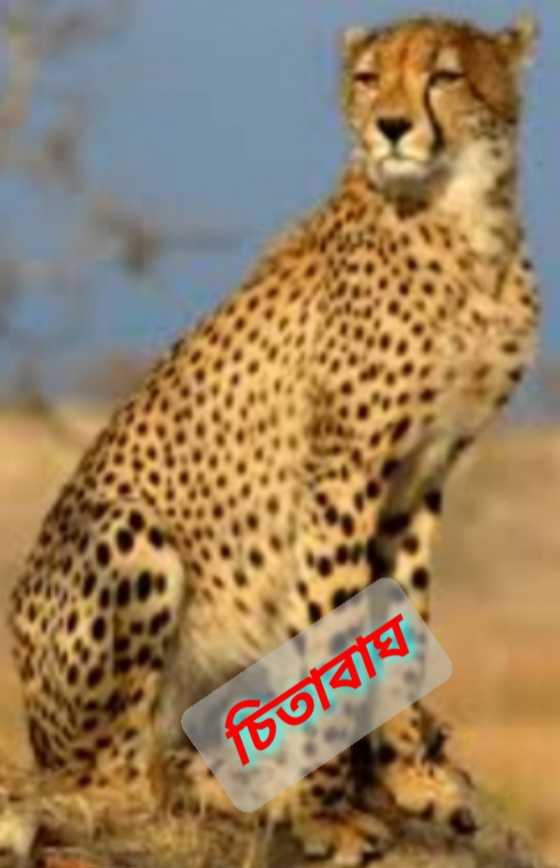
According to plan , India will be receiving 12 cheetahs from South Africa within upcoming few months. The aim behind the relocation is to revive a species that first went extinct in India in the 1950s (according to several sources)
Reportedly, At Madhya Pradesh’s Kuno National Park, the primary site for the “reintroduction”, preparations for Keeping the cheetahs are underway, though details of their arrival are yet to be finalised & still unknown.
But as per sources ,8 cheetahs were to be brought in from Namibia as well, but the Namibian government has not yet responded to Indian request.
But on the other hand, a delegation from South Africa had visited the forest and wildlife departments of Madhya Pradesh between 15 and 17 June to brief the officials on how to handle the cheetahs once they arrive from South Africa. Respectively, In this month itself ,a delegation from India had already visited both South Africa and Namibia to observe how to take care of these big cats.
This plan to bring cheetahs to India was initially from Iran and now from the African continent has been decades in the process, and fraught with controversies of many times. As per sources, conservationists in India are already skeptical of the plan’s success and fear it will detract attention from the conservation of other endangered species in need of translocation.
According to the history of this plan ,In 2012, the Supreme Court had stayed the government’s plans to import cheetahs, and in 2013 reiterated its stance, saying that the government needed to produce a detailed study before the introduction of cheetahs from Africa could be considered. Since then Govt . Agencies has been working on it.
But the Kuno National Park had originally been earmarked for the reintroduction of the Asiatic lion from Gir in Gujarat, which the Supreme Court in 2013 had said was of “utmost importance”, ordering that the lions be translocated within six months of the judgment. But nearly a decade later, diversifying the lion’s habitat — considered essential for its long-term survival by conservationists in India — has been overshadowed by the cheetah relocation plan after the National Tiger Conservation Authority (NTCA) appealed the apex court to reconsider its decision in 2017 and since then it has become a bone of contention.
The government had already released an ‘Action Plan for introduction of Cheetah in India’ in January this year and, according to media reports, officials estimate the cheetahs could arrive as early as in August, marking the first ever transcontinental relocation of an endangered species and it’s obviously a big challenge.According to the International Union for Conservation of Nature, a global authority on the status of the natural world, about 7,100 cheetahs remain in the world and their numbers have been on the decline despite efforts.
However, this plan to “reintroduce” the cheetah in India was announced in 2009 and formulated in 2010 under the leadership of then environment minister Jairam Ramesh. The plan was popularised as an opportunity for India to make a global breakthrough in wildlife conservation.
In this process,at first, the Indian government approached Iran to supply the rare Asiatic cheetah — the same subspecies that went extinct in India — to re-establish their presence in the subcontinent. The government was even keen on cloning the Asiatic cheetah, but Iran refused repeatedly, citing low numbers of the species in its own country.
But to keep the plan alive, the government looked to import the African cheetah — a different subspecies that has never existed in India.
According to sources, the Rs 224 crore effort as estimated by the government in its cheetah reintroduction plan document, doesn’t come to naught. Several studies have shown that breeding cheetahs in captivity is extremely difficult.After the initial batch of 12 cheetahs is brought to India, eight will arrive each year from South Africa.
The cheetah relocation is also being touted as a means to conserve India’s fast-depleting grasslands, which is home to a myriad other species — including the critically-endangered Great Indian Bustard and the endangered Indian wolf, which has been a challenge .
According to the plan, the best case scenario is for Kuno National Park to host 36 “individuals” after the cheetahs establish themselves in a completely new habitat.

 The Rainbow